
How Allergic Rhinitis Affects Your Health and Ways to Treat It
Allergic rhinitis, commonly known as hay fever, occurs when the immune system reacts to allergens like pollen, dust, or pet dander, leading to symptoms such as sneezing, a runny nose, and itchy eyes. Our board-certified allergists, Dr. Jon E. Stahlman, MD, and Dr. Deidre D. Crocker, MD, at Allergy & Asthma Center, offer personalized treatment options, including antihistamines, nasal sprays, and immunotherapy, to help manage symptoms and improve your quality of life. For more information, contact us or book an appointment online. We are conveniently located at 2987 Clairmont Rd #175, Atlanta, GA 30329.
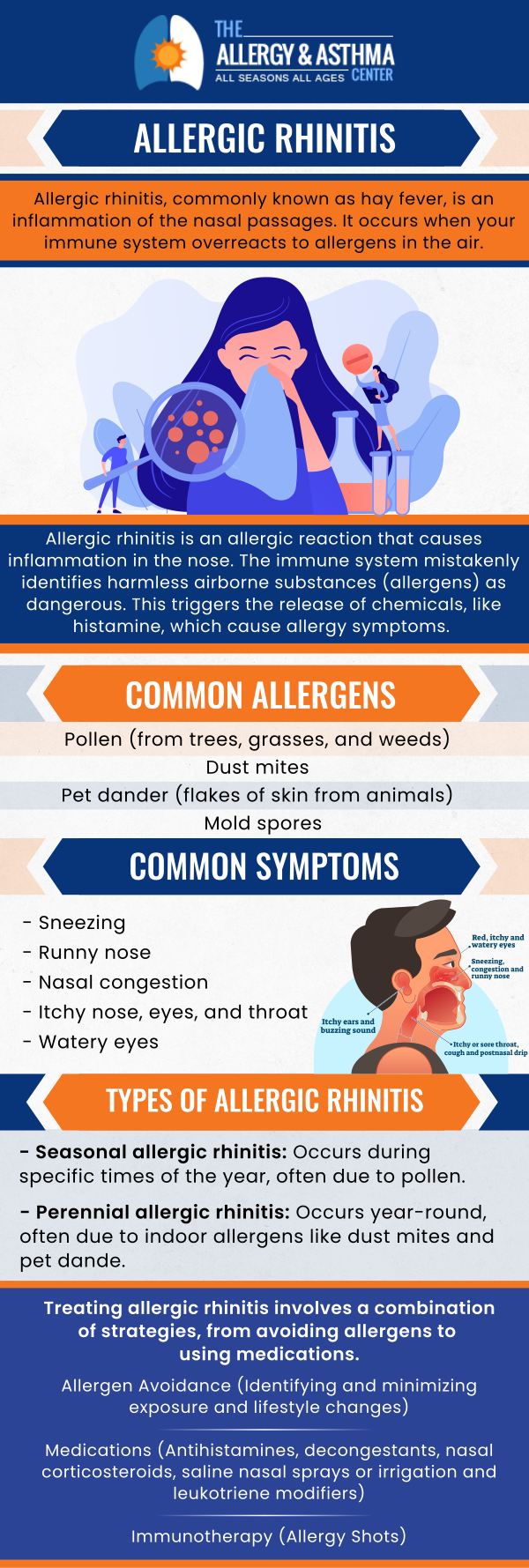
Table of Contents:
How is allergic rhinitis diagnosed?
Can allergic rhinitis lead to other health complications?
Can allergic rhinitis affect sleep quality?
What are the treatment options for allergic rhinitis offered by Dr. Stahlman & Dr. Deidre?
At the Allergy & Asthma Center, we specialize in the accurate diagnosis of allergic rhinitis using a comprehensive approach. When you visit our practice, our experienced team will begin with a thorough medical history, asking about your symptoms, their onset and duration, potential triggers, and any family history of allergies or asthma. We will also perform a detailed physical examination, focusing on your nose, throat, and eyes for signs such as pale or swollen nasal passages, clear nasal discharge, or red, watery eyes.
To pinpoint the specific allergens causing your symptoms, our providers may recommend allergy testing. At the Allergy & Asthma Center, we offer both skin prick testing—where small amounts of common allergens are applied to your skin to check for a reaction—and blood tests, such as specific IgE antibody testing. These diagnostic tools help us accurately identify your triggers and differentiate allergic rhinitis from other conditions like non-allergic rhinitis or sinus infections.
Our goal is to provide you with a precise diagnosis and a personalized treatment plan so you can breathe easier and live better. If you’re struggling with persistent allergy symptoms, contact us today to schedule an evaluation with one of our specialists.
At the Allergy & Asthma Center, we understand that allergic rhinitis—commonly known as hay fever—is more than just an occasional nuisance. Left unmanaged, allergic rhinitis can lead to a range of health complications that can significantly impact your quality of life. That’s why our team is dedicated to providing comprehensive care and personalized treatment plans for our patients.
One of the most common complications we see at our clinic is sinusitis—an inflammation or infection of the sinuses that often develops when ongoing nasal congestion and swelling block normal drainage. Individuals with allergic rhinitis are also at increased risk for ear infections, especially children, due to inflammation affecting the Eustachian tubes and causing fluid buildup. Importantly, there is a close relationship between allergic rhinitis and asthma. At the Allergy & Asthma Center, we frequently help patients who experience both conditions, as poorly controlled allergic rhinitis can trigger or worsen asthma symptoms.
Chronic nasal inflammation from allergic rhinitis can also disrupt sleep, leading to snoring or even obstructive sleep apnea, which in turn may cause daytime fatigue, reduced concentration, and a lower quality of life. Over time, ongoing inflammation may even result in the formation of nasal polyps—noncancerous growths that can further obstruct airflow and complicate sinus issues. Persistent postnasal drip can cause recurrent sore throats or throat infections as well.
At the Allergy & Asthma Center, we understand how allergies can disrupt every part of your life—including your sleep. Allergic rhinitis (commonly known as hay fever) causes symptoms such as nasal congestion, sneezing, runny nose, and itching. These symptoms often worsen at night or early in the morning, leading to difficulty breathing comfortably, frequent awakenings, and unrestful sleep. Many of our patients report trouble falling asleep, waking up multiple times during the night, and feeling tired during the day. Left unmanaged, allergic rhinitis can also contribute to more serious sleep issues such as snoring and sleep apnea, impacting your concentration, mood, and overall well-being.
At the Allergy & Asthma Center, we specialize in diagnosing and treating allergic conditions that interfere with your sleep. Our experienced providers offer personalized treatment plans, including allergen avoidance strategies, prescription medications such as antihistamines and nasal corticosteroids, and advice for creating a clean, allergy-friendly sleep environment. If you or your child continues to experience sleep disturbances despite treatment, we encourage you to schedule an appointment with our team. We’re committed to helping you breathe easier—day and night—so you can get the restful sleep you deserve.
Our board-certified allergists, Dr. Jon E. Stahlman, MD, and Dr. Deidre D. Crocker, MD, provide comprehensive care for patients suffering from allergic rhinitis. We are dedicated to delivering personalized treatment plans tailored to each patient’s symptoms and lifestyle. Our approach begins with careful identification of your specific allergy triggers. Dr. Jon helps you make practical changes—such as using air purifiers or keeping windows closed during high pollen seasons—to minimize allergen exposure and reduce symptoms.
When environmental modifications aren’t enough, our providers offer a full range of medications to manage allergic rhinitis. These may include antihistamines to relieve sneezing, itching, and a runny nose, as well as intranasal corticosteroid sprays to control inflammation and congestion. For persistent symptoms, additional options such as leukotriene receptor antagonists or nasal antihistamine sprays may be recommended. For patients whose symptoms are not adequately controlled with medication and avoidance strategies, the Allergy & Asthma Center offers immunotherapy (allergy shots). This long-term treatment helps desensitize your immune system to specific allergens, often providing lasting relief and improving overall quality of life.
At every step, our team at the Allergy & Asthma Center emphasizes patient education and collaboration. We work closely with you to develop a comprehensive, individualized management plan designed to minimize your symptoms and support your well-being. For more information, please contact us or book an appointment online. We have convenient locations to serve you in Lawrenceville GA, Atlanta GA, and Conyers GA.We serve patients from Lawrenceville GA, Atlanta GA, Conyers GA, Scottdale GA, Tucker GA, Rock Chapel Rd GA, Klondike Rd GA, Suwanee GA, Moon Place Rd GA and Dacula GA.
Check Out Our 5 Star Reviews


Additional Allergy & Asthma Services
▸ Allergy Shots
▸ Allergy Testing
▸ Asthma
▸ Bronchodilators
▸ Drug Allergy
▸ Food Allergy
▸ Insect Allergy
▸ Nasal/Sinus Allergies
▸ Pediatric Allergy
▸ Pediatric Asthma
▸ Skin Allergy
▸ Spring Allergies


