
Pediatric Asthma Treatment Clinic in Conyers, GA
Our board-certified pediatric allergists, Dr. Jon E. Stahlman, MD, and Dr. Deidre D. Crocker, MD, and their experienced medical staff at Allergy & Asthma Center provide care and treatment for children suffering from asthma. We specialize in diagnosis, assessment, monitoring, and treatment for children with asthma. For more information, contact us or book an appointment online. We are conveniently located at 1755 Parker Rd, Suite A120 Conyers, GA, 30094.
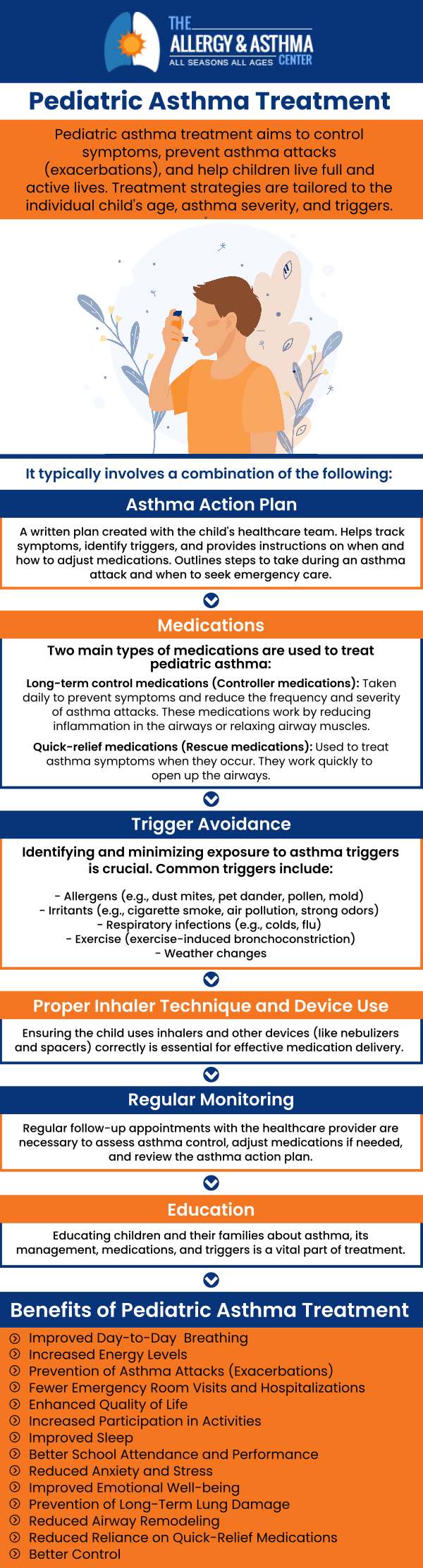
Table of Contents:
What are the common misconceptions about asthma in children?
What are the signs of asthma in a child?
What to do for a kid with asthma?
Is children’s asthma curable?
How is pediatric asthma diagnosed at the Allergy & Asthma Center?
● Most children outgrow asthma – Asthma can improve with age but often certain situations may trigger symptoms again. Even if asthma goes into remission, patients may still need to carry a quick relief inhaler at all times.
● Children with asthma cannot exercise – Once a child’s asthma is controlled, exercise should become a part of his or her daily lives. Children with asthma can and do excel in athletics. Many Olympic athletes have asthma.
● Asthma medications will stunt my child’s growth – Inhaled corticosteroids are key medications in managing asthma but early studies did find some slowing of growth velocity (up to half an inch) in the first year of use. Since then subsequent studies have been reassuring showing normal growth on inhaled corticosteroids in subsequent years and children projected to reach normal adult height.
Asthma, a common respiratory condition, can present various symptoms in children. These may include wheezing, coughing, shortness of breath, and chest tightness. Less common symptoms can be fatigue, irritability, poor sleep, and dark circles under the eyes. Severe asthma attacks can lead to severe coughing, rapid worsening of breathing difficulties, and in extreme cases, trouble speaking or even unconsciousness.
Our expert team is adept at recognizing these symptoms and distinguishing them from other similar conditions like bronchitis, bronchiolitis, or heart murmurs. We make use of comprehensive medical history, physical examinations, and lung function tests to ensure an accurate diagnosis.
We also understand the role that triggers like cold air, smoke, and allergens can play in exacerbating these symptoms. As we specialize in allergies, we can help pinpoint and manage potential triggers to reduce the occurrence of asthma attacks.
Additionally, we recognize that children with allergies, eczema, poor growth or weight gain, or a family history of asthma are at a higher risk of developing the condition. Our team is experienced in managing such risk factors and can provide advice and treatment options tailored to the unique needs of your child.
Allergy & Asthma Center is dedicated to the early diagnosis and effective management of asthma in children. We are here to help your child breathe easier and live a more comfortable, active life. If you notice any potential asthma symptoms in your child, do not hesitate to schedule a consultation with us.
Should your child exhibit persistent symptoms such as coughing, wheezing, chest tightness, or shortness of breath, especially during exercise or exposure to triggers, we recommend seeking medical attention promptly. These symptoms could be indicative of asthma. Our allergists will conduct a physical exam and inquire about your child’s symptoms, medical history, and family history of allergies or asthma. We may recommend lung function tests, such as spirometry, to assess airflow and confirm a diagnosis.
After your child has been diagnosed with asthma, we will guide you through several steps to manage their condition. Our team will provide you with an asthma action plan, a personalized treatment plan that typically includes:
● Medications: Our team will help you understand the medication prescribed for your child. Quick-relief (bronchodilators) inhalers open airways during acute attacks, while long-acting (controller) inhalers and oral medications like leukotrienes modifiers and inhaled corticosteroids are preventive and should be taken daily to manage symptoms and reduce inflammation.
● Trigger Avoidance: We will assist you in creating an asthma-safe environment by identifying and minimizing exposure to known asthma triggers such as allergens (pollen, pet dander), irritants (smoke, pollution), and respiratory infections.
● Education: We will teach your child about their asthma, the importance of medication adherence, and how to recognize and manage symptoms. If they’re old enough, they will also learn how to use their inhaler or nebulizer correctly.
● Follow-Up Care: Regular follow-ups with our doctors are essential to monitor your child’s condition and adjust medications or treatment plans as necessary. We provide a written asthma action plan for management outside of clinic visits.
At Allergy & Asthma Center, we understand the emotional impact of an asthma diagnosis. We encourage open communication and offer support to help your child express their feelings and fears about their condition.
In severe asthma situations, such as difficulty breathing or talking, blue or gray lips or fingernails, confusion or loss of consciousness, seek immediate medical attention and administer quick-relief medication if available. Contact emergency medical services if symptoms worsen or medication is ineffective.
Our dedicated team of experts ensures that while there is currently no cure for asthma, we can effectively manage your child’s condition by identifying and avoiding triggers such as smoke, dust mites, and pollen, correct use of medication, and continuous monitoring of your child’s asthma symptoms.
We provide a range of medications which can include inhaled bronchodilators to open airways, inhaled corticosteroids to reduce inflammation, and oral leukotriene modifiers to block inflammatory chemicals. We also advise on environmental control of asthma, which can involve using an air purifier and maintaining cleanliness and dryness in your home.
At Allergy & Asthma Center, we believe in the power of education. We ensure that children understand their condition and how to manage it. Monitoring can include using a peak flow meter to track lung function and observing for symptoms such as wheezing, coughing, and shortness of breath.
We work towards controlling the disease to prevent chronic and troublesome symptoms, reduce your child’s need for quick-relief medicines, help maintain good lung function, allow your child to maintain their normal activity level and sleep through the night, and prevent asthma attacks that could result in a hospital visit.
As part of our comprehensive approach, Allergy & Asthma Center provides advice on preventative measures that may reduce the risk of asthma, such as breastfeeding for at least six months, avoiding exposure to secondhand smoke, using nasal saline drops to moisturize nasal passages, and vaccinating against respiratory viruses such as influenza and pneumonia.
With regular follow-ups at our center, we adjust treatment plans and monitor progress to ensure your child can live a normal, healthy life without being held back by asthma. Our detailed plans outline your child’s daily treatment, including which medicines to take and when, and when to call us or visit the emergency room.
The diagnostic process includes a thorough physical examination of the child. Our board-certified allergists, Dr. Jon E. Stahlman, MD, and Dr. Deidre D. Crocker, MD, check for signs of asthma or allergies like wheezing, chest tightness, or nasal swelling and listen for any abnormal sounds in the lungs.
To further confirm the diagnosis, we may order pulmonary function tests such as spirometry and peak expiratory flow (PEF) monitoring. These tests measure the volume and flow of air a child can exhale and how quickly, helping to gauge the level of airway obstruction. For children under 5, diagnosis may be based on clinical symptoms and response to asthma medication, as spirometry can be challenging to perform accurately.
For children with frequent or severe asthma symptoms, we may order further testing like chest X-rays or nitric oxide measurement in exhaled breath. These tests help us understand what triggers the child’s asthma and manage the condition accordingly or rule out other conditions with similar symptoms.
Our doctors recommend regular monitoring of symptoms using a symptom diary or app to track severity and identify potential triggers. We remind parents and caregivers that asthma symptoms can change over time, necessitating adjustments in treatment. Therefore, we provide regular follow-ups to monitor the child’s asthma effectively. At Allergy & Asthma Center, your child’s health is our top priority. For more information, contact us or book an appointment online. We are conveniently located at 1755 Parker Rd, Suite A120 Conyers, GA, 30094. We serve patients from Atlanta GA, Brookhaven GA, Chamblee GA, Decatur GA, Dunwoody GA, Tucker GA, Sandy Springs GA, and the surrounding areas.
Check Out Our 5 Star Reviews


Additional Allergy & Asthma Services
▸ Allergy Shots
▸ Allergy Testing
▸ Asthma
▸ Bronchodilators
▸ Drug Allergy
▸ Food Allergy
▸ Insect Allergy
▸ Nasal/Sinus Allergies
▸ Pediatric Allergy
▸ Pediatric Asthma
▸ Skin Allergy
▸ Spring Allergies


