
What Is Immunotherapy for Allergies?
Immunotherapy for allergies, commonly known as allergy shots, is a treatment that helps reduce the severity of allergic reactions over time. It works by gradually desensitizing the immune system to specific allergens, leading to long-term relief from symptoms. Dr. Jon E. Stahlman, MD, at Allergy & Asthma Center, emphasizes that immunotherapy can be an effective solution for individuals with persistent allergies, offering lasting improvement in their quality of life. For more information, please contact us or book an appointment online. We have convenient locations to serve you in Lawrenceville GA, Atlanta GA, and Conyers GA.
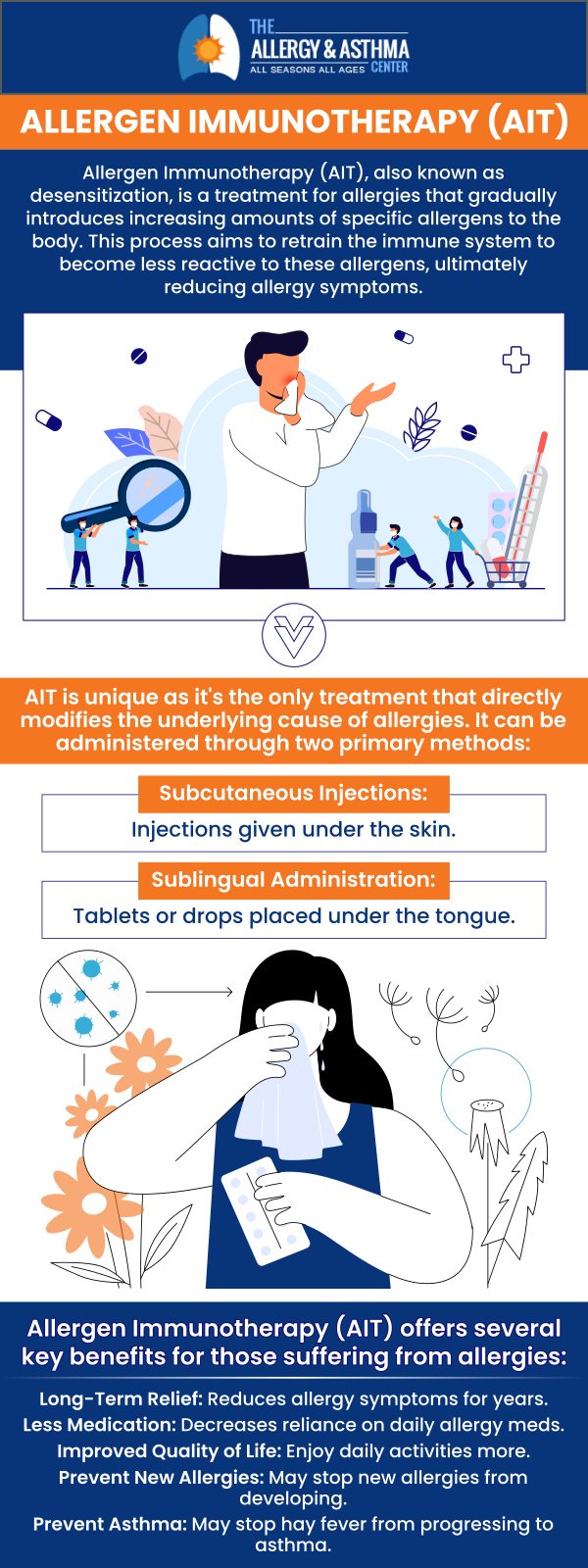
Table of Contents:
What exactly is immunotherapy for allergies?
What forms of immunotherapy are available for allergies?
What types of allergies can immunotherapy treat?
Why does Dr. Jon E. Stahlman recommend immunotherapy instead of just avoiding allergens?
Immunotherapy for allergies, also known as allergy shots or allergy injections, is a treatment designed to help the immune system build tolerance to allergens, reducing the severity of allergic reactions. The treatment involves gradually exposing the body to small, controlled amounts of allergens, which helps desensitize the immune system. Over time, this process reduces the body’s sensitivity to specific allergens, resulting in fewer or less severe allergic responses.
Immunotherapy works by targeting the underlying immune system response that causes allergic reactions. Normally, when the body encounters an allergen, it triggers an immune response that releases histamine and other chemicals, leading to symptoms such as sneezing, itching, and congestion. Immunotherapy works by gradually desensitizing the immune system to these allergens, retraining it to react less strongly.
In the Allergy & Asthma Center, our team often considers immunotherapy for individuals who struggle with chronic allergies that don’t respond well to medications or who want a long-term solution to their allergy symptoms. This treatment can help reduce the need for medications and provide relief for those who experience seasonal or year-round allergic rhinitis, asthma, or other allergic conditions. With the help of immunotherapy, individuals can lead a more comfortable life, free from the constant battle with allergy symptoms.
There are two primary forms of immunotherapy available for treating allergies: subcutaneous immunotherapy (SCIT), commonly known as allergy shots, and sublingual immunotherapy (SLIT), which involves taking allergen extracts in the form of tablets or drops placed under the tongue.
Subcutaneous immunotherapy (SCIT) is the more traditional method. It involves receiving regular injections of small amounts of allergens, which are gradually increased over time. SCIT typically requires visits to a healthcare professional, where the injection is administered. Initially, the injections are given more frequently (usually once a week), and as the patient becomes desensitized, the frequency of the shots decreases to once a month. SCIT is highly effective and can treat a wide variety of allergies, including pollen, dust mites, mold, and animal dander.
On the other hand, sublingual immunotherapy (SLIT) is a newer form of treatment. Instead of injections, patients take allergen extracts in the form of tablets or drops under the tongue. SLIT is typically administered at home, although some forms may be given initially under medical supervision. This form of immunotherapy is often used for seasonal allergies, particularly for allergens like grass and ragweed pollen. SLIT offers the convenience of home treatment and is effective for many patients who prefer an alternative to allergy shots.
Immunotherapy can treat a wide range of allergies, providing relief to individuals suffering from both seasonal and year-round allergic reactions. The most common types of allergies treated with immunotherapy include pollen allergies (hay fever), dust mite allergies, mold allergies, pet dander allergies, and certain insect sting allergies.
Seasonal allergies often caused by pollen from trees, grasses, or weeds, are among the most frequent types of allergies treated with immunotherapy. These allergies cause symptoms like sneezing, runny nose, itchy eyes, and congestion. Immunotherapy helps reduce these symptoms by desensitizing the immune system to the specific pollen allergens that trigger them. Individuals with hay fever due to tree, grass, or weed pollen often benefit significantly from immunotherapy.
Another common allergy treated with immunotherapy is dust mite allergy. Dust mites are microscopic creatures that thrive in household dust, and their waste products are a common allergen. People with dust mite allergies often experience year-round symptoms like nasal congestion and asthma-like symptoms. Immunotherapy can help reduce sensitivity to dust mites and provide long-term relief.
Mold allergies, caused by mold spores, are also treatable with immunotherapy. Mold spores are prevalent both indoors and outdoors, and they can cause persistent allergic reactions. Immunotherapy can desensitize the immune system to these spores and improve quality of life for those affected.
Pet dander allergies, caused by proteins found in the skin flakes of cats, dogs, and other animals, are another common issue that immunotherapy can address. Individuals with pet allergies often experience symptoms like sneezing, itching, and asthma. Immunotherapy can help alleviate these symptoms by gradually building tolerance to the proteins in pet dander.
In some cases, immunotherapy is used to treat allergies to insect stings, such as those from bees, wasps, or hornets. For individuals who have severe allergic reactions to insect stings, immunotherapy can significantly reduce the risk of anaphylaxis.
Dr. Jon E. Stahlman, MD, a specialist at the Allergy & Asthma Center, frequently recommends immunotherapy for patients who have persistent allergic reactions that cannot be controlled effectively through avoidance or medication alone. While avoiding allergens is an essential part of managing allergies, it’s often not enough, especially for individuals with severe or chronic allergies.
Avoidance strategies may involve staying indoors during pollen season, using air purifiers, or keeping pets out of the bedroom. However, these strategies can be challenging to implement consistently and may not be effective in eliminating exposure to allergens. In addition, some allergens, like dust mites or mold, can be present year-round, making avoidance a constant struggle.
Immunotherapy offers a more effective, long-term solution. Dr. Stahlman often points out that while medications like antihistamines and nasal sprays can help manage symptoms temporarily, they do not address the root cause of the allergic reaction. Immunotherapy, on the other hand, works by desensitizing the immune system to allergens, providing lasting relief that reduces dependence on medications.
By using immunotherapy, patients can experience a significant reduction in allergic symptoms over time, which can improve their quality of life. Dr. Stahlman emphasizes that immunotherapy can even provide a permanent solution for some patients, allowing them to stop relying on daily medications and live a more comfortable life without constant worry about allergens.
At the Allergy & Asthma Center, Dr. Stahlman and his team take a personalized approach to allergy treatment, tailoring immunotherapy to each patient’s specific needs. For more information, please contact us or book an appointment online. We have convenient locations to serve you in Lawrenceville GA, Atlanta GA, and Conyers GA.We serve patients from Lawrenceville GA, Atlanta GA, Conyers GA, Scottdale GA, Tucker GA, Rock Chapel Rd GA, Klondike Rd GA, Suwanee GA, Moon Place Rd GA and Dacula GA.
Check Out Our 5 Star Reviews


Additional Allergy & Asthma Services
▸ Allergy Shots
▸ Allergy Testing
▸ Asthma
▸ Bronchodilators
▸ Drug Allergy
▸ Food Allergy
▸ Insect Allergy
▸ Nasal/Sinus Allergies
▸ Pediatric Allergy
▸ Pediatric Asthma
▸ Skin Allergy
▸ Spring Allergies


