
Children’s Food Allergies Treatment in Conyers, GA
Navigating a child’s food allergy can be an overwhelming experience for parents, but our Conyers team is here to help. Our board-certified pediatric allergists, Dr. Jon E. Stahlman, MD, and Dr. Deidre D. Crocker, MD, provide highly accurate diagnostic testing and customized treatment strategies tailored to your child’s specific needs. From comprehensive dietary management and emergency epinephrine training to discussing emerging therapies, we give your family the tools to safely navigate meals with absolute confidence. For more information, contact us or book an appointment online. We are conveniently located at 1755 Parker Rd, Suite A120 Conyers, GA, 30094.
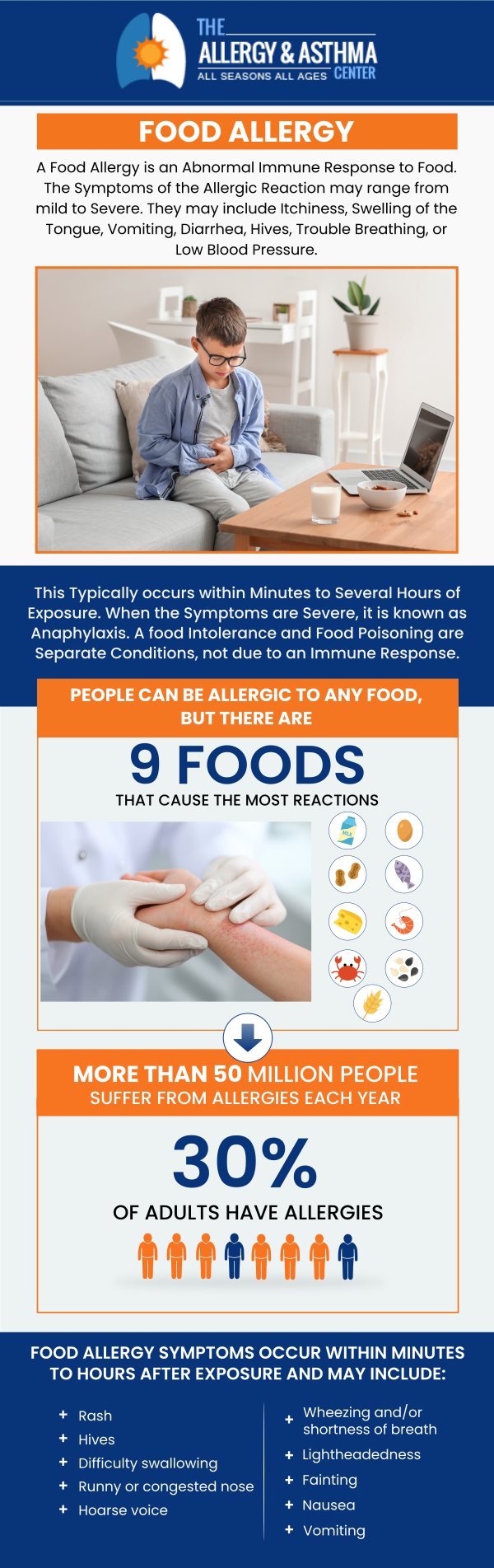
Table of Contents:
How do I know if my child is allergic to a certain food?
What are the signs and symptoms of a food allergy?
What are the most common food allergies experienced by children?
Can a child suddenly develop a food allergy?
How do you test kids for food allergies at The Allergy & Asthma Center?
There is no guarantee that your child has a food allergy just because he or she reacts to a particular food. Certain foods may cause food intolerance in some kids. Food allergies involve the child’s immune system, whereas food intolerances usually affect the digestive system. More people suffer from food intolerance than food allergies.
An allergy to a food is more dangerous than an intolerance to another food. It is usually necessary for the child to avoid the offending food completely. There is usually no serious consequence to food intolerance. Small amounts of the substance may be safe for the child to eat. The best way to know for sure if your child has a food allergy is to bring them in for testing at the Allergy & Asthma Center.
Histamine is released in the body as a result of an allergic reaction triggered by the immune system. There are different levels of severity associated with allergic reactions. It is possible for someone to have a severe reaction to a food regardless of the severity of their previous reactions.
Typically, symptoms of a food allergy include trouble breathing, wheezing, coughing, throat tightness, and hoarseness. Belly aching, diarrhea, vomiting, hives, swelling, and red spots may also accompany a food allergy. Other signs include itchy, swollen, or watery eyes and a potential drop in blood pressure that can result in lightheadedness.
Occasionally, allergies can cause severe reactions called anaphylaxis. The symptoms of anaphylaxis can be similar to those of a less severe reaction, but can quickly worsen. There is a possibility that the person may have trouble breathing or pass out. It is possible that more than one part of the body is affected. Anaphylaxis can be fatal if it isn’t treated with injectable epinephrine.
While a child can develop an allergy to almost any food, the vast majority of pediatric allergic reactions are triggered by just a handful of specific culprits. The most common food allergies in children include cow’s milk, eggs, peanuts, tree nuts (such as walnuts and cashews), soy, and wheat. Additionally, sesame has recently emerged as a highly common pediatric allergen.
The long-term outlook for these allergies varies significantly depending on the specific food. Fortunately, many children will naturally outgrow allergies to milk, eggs, soy, and wheat as their immune systems mature. Conversely, allergies to peanuts, tree nuts, fish, and shellfish tend to be more persistent and are often lifelong.
Because these common allergens are frequently hidden in everyday meals and snacks, navigating your child’s diet can feel overwhelming. At The Allergy & Asthma Center, our expert pediatric allergists provide highly accurate testing and customized management plans to keep your child safe, healthy, and thriving.
Yes, a child can absolutely develop a food allergy suddenly, even to a food they have safely eaten many times before. This unpredictable nature can be highly alarming for parents. A food allergy occurs when the immune system mistakenly identifies a harmless food protein as a dangerous invader. For reasons medical researchers do not fully understand, a child’s immune system can suddenly switch from tolerating a specific food to attacking it.
This sudden onset can happen at any age. A child who has happily eaten peanut butter for years might suddenly experience hives, facial swelling, vomiting, or even life-threatening anaphylaxis after their next bite. If you witness any sudden, severe symptoms after your child eats, seek emergency medical care immediately. Afterward, schedule a thorough evaluation with our board-certified pediatric allergists at The Allergy & Asthma Center. We will provide an accurate diagnosis, a personalized emergency action plan, and the guidance needed to keep your child safely protected.
When a child needs to be tested for food allergies, they should visit our board-certified pediatric allergists, Dr. Jon E. Stahlman, MD, and Dr. Deidre D. Crocker, MD, and staff at the Allergy & Asthma Center. They may order a skin test or a blood test to check for food allergies.
A skin test involves pricking your child’s forearm or back with liquid extracts of food allergens, checking for reddish raised spots (called wheals), and waiting. Having a positive food test suggests your child might be sensitive to the food in question.
Tests for IgE antibodies against specific foods are performed on the blood to confirm food allergies. The doctor may conduct a food challenge if previous tests are unclear, in which the person is given increasing amounts of the possible allergen to eat while being monitored for symptoms. As a life-threatening reaction could occur, the test should be conducted in a hospital or allergist’s office.
Allergy & Asthma Center can diagnose food allergies in children. Visit our clinic conveniently. We serve patients from Lawrenceville GA, Atlanta GA, Conyers GA, Suwanee GA, Duluth GA, Grayson GA, Decatur GA, Brookhaven GA, Lithonia GA, and Covington GA.
Check Out Our 5 Star Reviews


Additional Allergy & Asthma Services
▸ Allergy Shots
▸ Allergy Testing
▸ Asthma
▸ Bronchodilators
▸ Drug Allergy
▸ Food Allergy
▸ Insect Allergy
▸ Nasal/Sinus Allergies
▸ Pediatric Allergy
▸ Pediatric Asthma
▸ Skin Allergy
▸ Spring Allergies


