
Dyspnea Treatment in Lawrenceville, GA
Dyspnea, or shortness of breath, can occur with chronic respiratory and allergic conditions such as asthma and allergies. It may also develop during physical exertion, at high altitudes, or in response to other underlying health concerns. Symptoms can range from mild and occasional breathing difficulty to more persistent or severe episodes that interfere with daily activities. At The Allergy & Asthma Center, our board-certified allergists, Dr. Jon E. Stahlman, MD, and Dr. Deidre D. Crocker, MD, provide comprehensive evaluation and personalized treatment for patients experiencing dyspnea. For more information, contact us or schedule an appointment online. We are conveniently located at 565 Old Norcross Rd. Lawrenceville, GA, 30046.
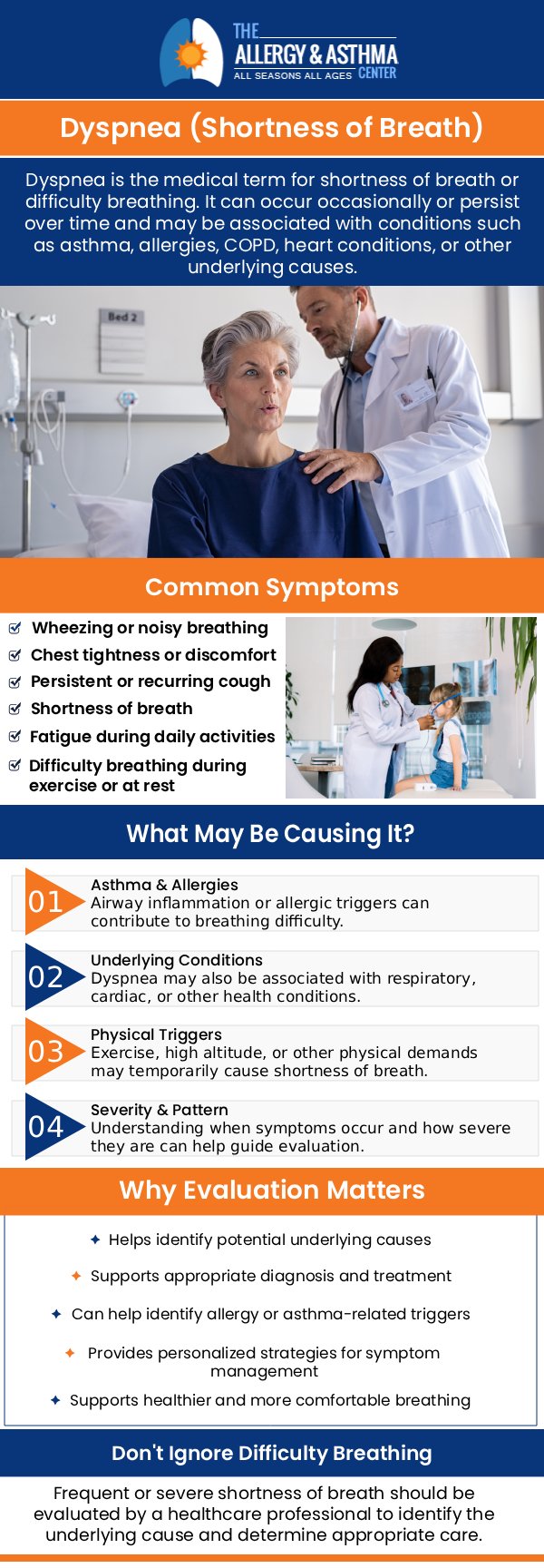
Table of Contents:
What is the main cause of dyspnea?
Is dyspnea a serious condition?
What are the symptoms of dyspnea?
What are the stages of dyspnea?
Why Choose Our Board-Certified Allergists, Dr. Jon E. Stahlman, MD, and Dr. Deidre D. Crocker, MD, for Dyspnea Care?
Shortness of breath can make everyday activities more difficult and may be a sign that an underlying respiratory condition needs attention. Managing dyspnea begins with identifying its cause, which may be related to asthma, allergies, environmental triggers, physical exertion, or other health concerns. Treatment may include avoiding known triggers, using medications when appropriate, and making lifestyle changes that support easier breathing. In more serious cases, additional therapies may be recommended based on the patient’s symptoms and overall health.
If dyspnea becomes frequent, persistent, or severe, a medical evaluation can help determine the most appropriate next steps. At The Allergy & Asthma Center in Lawrenceville, GA, our team provides personalized care for patients experiencing shortness of breath and related respiratory symptoms. We focus on identifying contributing factors, managing symptoms, and helping patients breathe more comfortably in their daily lives.
Dyspnea, commonly described as shortness of breath, does not have one single cause. It can develop when the lungs, airways, heart, or other body systems are unable to meet the body’s breathing and oxygen needs efficiently. In many patients, heart and lung conditions are among the most common causes of dyspnea, including asthma, chronic obstructive pulmonary disease (COPD), pneumonia, and heart failure.
For people with asthma, dyspnea may occur when the airways become inflamed and narrowed, making it harder for air to move in and out of the lungs. Allergens, respiratory infections, exercise, cold air, smoke, and other environmental irritants may trigger or worsen these symptoms. Allergies can also contribute to breathing difficulties, particularly when they aggravate an existing respiratory condition.
Shortness of breath can also occur for reasons unrelated to asthma or allergies. Heart disease may cause breathlessness when the heart cannot circulate oxygen-rich blood effectively. Other possible causes include anemia, physical deconditioning, obesity, anxiety or panic attacks, pulmonary conditions, and certain neuromuscular disorders. The timing, severity, associated symptoms, and activities that trigger dyspnea can provide important clues about its underlying cause.
Because dyspnea can have many possible explanations, persistent or recurring breathing difficulty should be medically evaluated rather than assumed to be caused by one condition. A healthcare professional may review symptoms, medical history, breathing patterns, and other findings to determine whether asthma, allergies, another respiratory condition, or a different health concern may be contributing. Sudden severe shortness of breath, especially with chest pain, requires prompt emergency medical attention.
Yes, dyspnea is a serious condition and should not be ignored. Shortness of breath is the body’s way of telling you that something is wrong and needs to be addressed. If you are experiencing symptoms such as wheezing, chest tightness, or coughing, it is important to seek medical attention right away.
If you are having trouble managing your dyspnea, there are a number of resources available to provide support and guidance. One option is visiting The Allergy & Asthma Center, where you can speak with board-certified allergists who specialize in the diagnosis and treatment of breathing issues caused by allergies or asthma. They will help identify triggers and create an individualized treatment plan to help you manage your symptoms.
Dyspnea is most commonly recognized as a feeling of shortness of breath or difficulty getting enough air. Some people describe it as chest tightness, air hunger, or the sensation that they need to work harder than usual to breathe. Symptoms may occur suddenly or develop gradually, and they can range from mild discomfort during activity to noticeable breathing difficulty even while resting.
Other symptoms may include rapid or shallow breathing, wheezing, coughing, chest discomfort, or feeling unusually tired during routine activities. A person may also notice that climbing stairs, walking short distances, exercising, or lying flat makes breathing more difficult. In some cases, dyspnea may be accompanied by dizziness, weakness, or a faster heartbeat, depending on what is causing the breathing problem.
The symptoms of dyspnea can vary based on whether the underlying cause involves asthma, allergies, a respiratory infection, a heart condition, or another health concern. Frequent, persistent, or worsening shortness of breath should be evaluated to determine the cause and appropriate treatment. Sudden severe breathing difficulty, especially when accompanied by chest pain, fainting, or bluish lips or skin, requires immediate medical attention.
Dyspnea does not have fixed medical stages in the same way some diseases do. Instead, it is generally described according to how severe the shortness of breath is and how much it affects normal daily activities. Some people experience breathlessness only during intense physical activity, while others may notice symptoms during routine movements or even while resting.
Mild dyspnea may occur when exercising, climbing stairs, or walking uphill. Moderate dyspnea can make activities such as walking longer distances, completing household tasks, or keeping pace with others more difficult. A person may need to slow down or stop periodically to catch their breath as symptoms become more noticeable.
Severe dyspnea may occur with minimal activity and can interfere with basic tasks such as dressing, bathing, or moving around the home. In some cases, breathlessness may also occur at rest. Because increasing shortness of breath can be associated with asthma, allergies, lung conditions, heart problems, or other health concerns, persistent or worsening symptoms should be professionally evaluated to determine the underlying cause and appropriate treatment.
Choosing experienced allergy and asthma specialists can make an important difference when shortness of breath is affecting your comfort, activity level, or quality of life. Dr. Jon E. Stahlman, MD, and Dr. Deidre D. Crocker, MD, take a personalized approach to evaluating dyspnea by reviewing your symptoms, medical history, possible allergy triggers, asthma concerns, and other factors that may be contributing to breathing difficulties. Their goal is to identify the underlying cause and develop a care plan tailored to your individual needs.
At The Allergy & Asthma Center, our board-certified allergists focus on helping patients understand their symptoms and manage respiratory concerns with appropriate treatment and ongoing support. Whether dyspnea is related to asthma, allergies, environmental triggers, or another respiratory issue, Dr. Stahlman and Dr. Crocker work closely with each patient to improve symptom control and support easier breathing during everyday activities. For more information, contact us or book an appointment online. We are conveniently located at 565 Old Norcross Rd. Lawrenceville, GA, 30046. We serve patients from Lawrenceville GA, Atlanta GA, Conyers GA, Scottdale GA, Tucker GA, Rock Chapel Rd GA, Klondike Rd GA, Suwanee GA, Moon Place Rd GA, and Dacula, GA.
Check Out Our 5 Star Reviews


Additional Allergy & Asthma Services
▸ Allergy Shots
▸ Allergy Testing
▸ Asthma
▸ Bronchodilators
▸ Drug Allergy
▸ Food Allergy
▸ Insect Allergy
▸ Nasal/Sinus Allergies
▸ Pediatric Allergy
▸ Pediatric Asthma
▸ Skin Allergy
▸ Spring Allergies


